Table Of Content
Additionally, 10 electricians and other specialists worked on the inner workings of the office across the 17-day build. We cannot therefore call it a completely 3D printed house, as other workers filled in various other components. But 3D printing has never claimed to be able to insert complex electrical systems as it prints, just create the structure in record time. With this project showing huge ambition, perhaps Dubai will become a world leader in 3D printed houses. Benoit Furet, the man behind the project, believes 3D printed houses offer a solution to the growing housing shortage and for social housing in the future.
Zero Carbon Homes - The S1600 Prefab Eco Home gets affordably Close

The 3D printed home, built in a week on a Milan square using recycled concrete, is around 100 square meters and contains a living area, bedroom, kitchen, bathroom and roof terrace. Prominent 3D printed house constructor CyBe Construction created the house with their concrete 3D printer; able to print a single wall in between 60 to 90 minutes. Like New Story’s plans for the developing world, this interesting prototype may form the basis for building houses in poorer countries. In more deprived areas where the imminent problem is shelter rather than wiring and pipes inside houses, these cheap 3D printed houses offer an effective solution to a real crisis.
Key Milan design week installations
Keep in mind that a project’s “printing time” may exclude time for any second-fix installations or construction time necessary to piece together a project printed on-site and transported to its final location. This will consist of choice ingredients — often a cement blend — but can range from sand and special polymers to bio-resins, like soil, clay or wood flour, which is a fine sawdust mixed with a corn-based binder. Highly customizable and free of form, construction 3D printing is a new-age tech on the verge of market disruption, holding the potential to mass produce housing. So we call for caution when it comes to believing everything you might find online about 3D printed homes being "the" solution to the challenges facing the North American construction industry. The same goes for ICON, which mentions printing a small building in Austin in 24 hours when instead the printing was done over several days. "ICON claimed that its technology "could" 3D print the building in 24 hours, but provided no documentation to prove it" (COBOD).
Examples of 3D-Printed Houses
This 1022 square foot 3D printed house took 54 hours to build — though this was just the structure. An additional four months for fitting the windows, doors, and other parts was necessary before the home was finished. The team behind this extraordinary achievement now believe they could create a similar house in 33 hours, citing additional knowledge and tech advances. For those of you keeping score, you may be thinking that $475,000 isn’t exactly affordable housing, and you’d be right.
Could 3D printed homes help Ohio's affordable housing shortage? - The Statehouse News Bureau
Could 3D printed homes help Ohio's affordable housing shortage?.
Posted: Mon, 22 Apr 2024 13:45:00 GMT [source]
3D Housing 05 – Milan Design Week 3D printed building
Some real estate marketplaces like Zillow, or some homeownership assistance programs like Habitat for Humanity, can sell 3D-printed houses. ICON, a 3D-printing construction company, said it could produce a 600 to 800-square-foot, economy-sized building for as low as $4,000 in 24 hours, as reported by Business Insider. Much like your desk-side inkjet printer, the mixture is then heated during a thermal extraction process. The paste squeezes through a nozzle, bringing the digital rendering into physical form.
Here’s a look at the cost of 3D-printed homes and whether you should consider actually living in one. It’s made from specially formulated concrete with nano polymers that harden faster than normal concrete. Within the first 24 hours, it registers at the standard hardness of a brick house, and after 28 days it’s hardened to that of a bridge. Mighty Buildings and Palari Group plan to develop 15 homes by 2022, each consisting of three bedrooms, two bathrooms, a terrace, and a swimming pool within 1,450 square feet of space. The team starts by adding dry Lavacrete (a special form of concrete), water and additives into a portable mixing machine known as Magma. Once the material is properly mixed and ready to go, Magma pumps it into the Vulcan for printing.
While there are references to 24-hour construction times in articles and advertisements touting 3D printed homes, no project has been able to demonstrate such a record. The Fibonacci House in British Columbia, for example, was built off-site in 11 days. So, while at first glance the idea of 3D printing homes seems interesting, would it really allow us to choose a predefined model online and agree on a date to "print" our house on any site, quickly and at as low a cost as we've read? In the context of 3D printing, the term "extruding" is often used to describe the process of depositing material layer by layer to create a three-dimensional object.
A document published by COBOD, a Danish company that is a global leader in 3D printing solutions for the construction industry, warns consumers by taking stock of what 3D construction is really like today. For example, it mentions the company Winsun, which claims to have built 10 3D buildings in 10 days. In fact, they assembled 10 buildings in 10 days, from 3D printed components produced in a factory long before. For the time being, 3D constructions are mainly made of mortar-concrete or plastic, materials that have a heavy environmental impact. “3D homes will definitely have a large impact on the real estate industry because of two important reasons,” said Theresa Raymond, broker and owner at TN Smoky Mtn Realty.
In the United States, the nonprofit work continued in partnership with Community First, an innovative housing development that provides affordable and permanent residences for the chronically unhoused. Houston is getting what's believed to be the country's first 3D-printed two-story home. By automating construction, building with ARCS is safer for workers than any alternative.
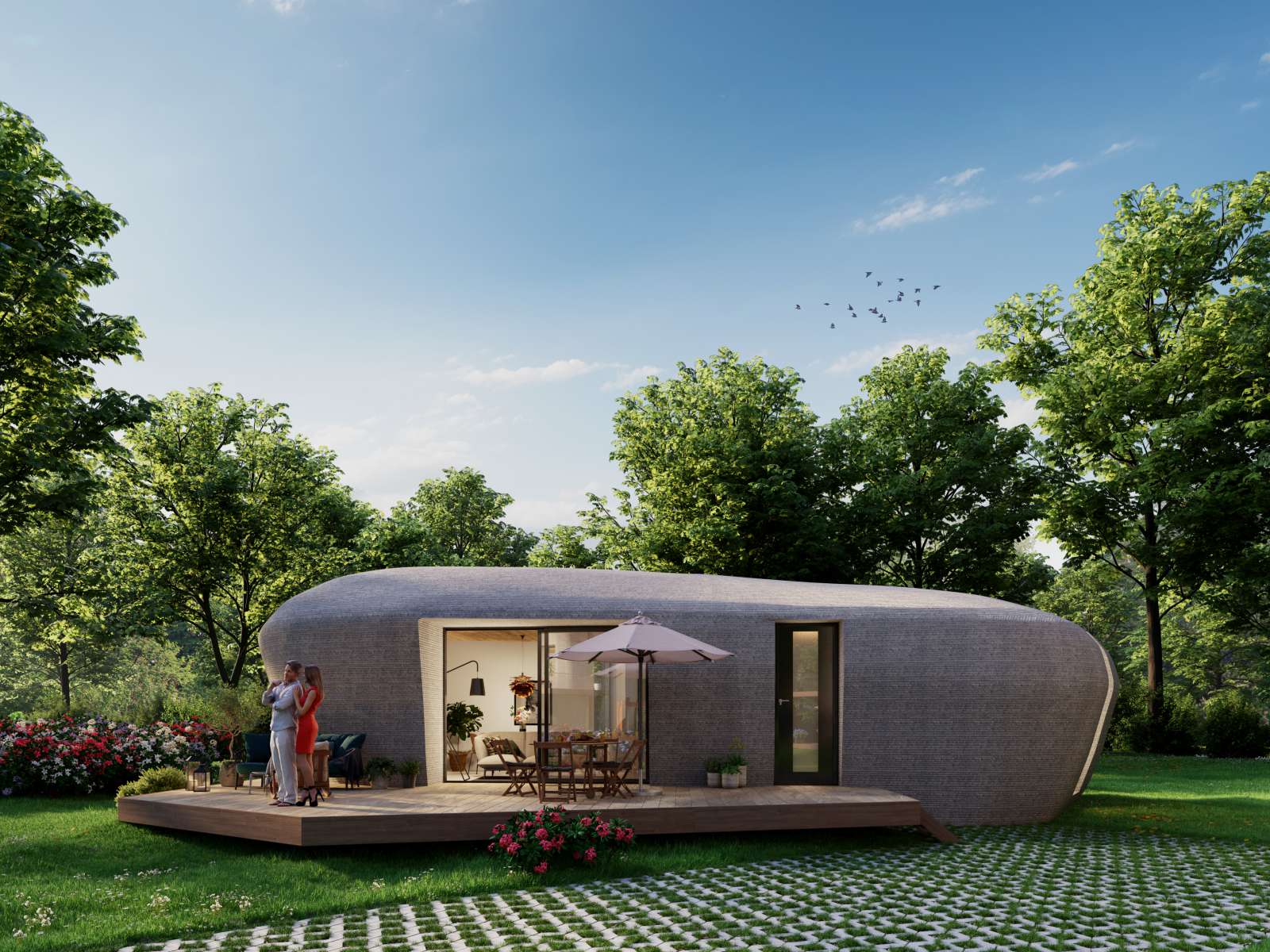
The first of these 1,011-square-foot dwellings was printed in 120 hours on-site as 24 separate parts. Matching their backdrop of Eindhoven, a techy city in the Netherlands known for its cutting-edge design, Project Milestone houses resemble elongated boulders with smooth, rounded edges. With extra-thick insulation and a connection to the heat grid, these structures score high marks in energy efficiency, according to online media platform 3D Natives. Its first tenants, Dutch couple Elize Lutz and Harrie Dekkers, received their key on April 30, 2021. NASA has designed, with the company ICON, a 170 m2 3D printed habitat in order to simulate a mission to the Moon (Project Olympus), where buildings could be constructed using resources found on the Moon. For the moment, therefore, unless we use local bio-sourced elements as was done for the Tecla project, the 3D printing of buildings should be limited to these extra-planetary projects...
The house is also fitted with eco-tech, from a recirculating shower to a green roof. Called the PRVOK, the house has space for two, including a living room, kitchen, bedroom, and bathroom. Construction began on March 19th, 2020, and took around three weeks to print, but Kamp C believes future homes can be completed in just two days. The house also features an open fireplace and an inflatable pink roof that can be erected if it rains or snows. It was created as a case study for how a combination of modern and ancient technology could be used to create a home big enough for two people. The structure was fitted with glass doors and a large skylight at the top of each dome that allows light to enter the space.
The structural walls are printed from soil, while the cavities are filled with the rice waste, which provides insulation. Rice husks were also used on the interior of the structure, covering the walls and ceiling of the home to form a natural plaster. Built as part of a scheme that aims to become the world's first 3D-printed houses used as rental properties, this boulder-shaped home became the first lived-in 3D-printed home in Europe. The studio combined modern technology and locally sourced clay to produce the homes, using a multilevelled 3D printer that can complete the structure in 200 hours while consuming only six kilowatts of power. In collaboration with 3D-printing specialists WASP, Mario Cucinella Architects looked to vernacular architecture and ancient building techniques to create and develop this low-carbon housing prototype.


No comments:
Post a Comment